
When I was a student at Oxford, a blow-up sex doll was brought into my department to celebrate someone passing an exam. It was paraded around, fondled and eventually took up permanent residence in an office.
I felt disappointment, but little surprise, at how freely men turned women’s bodies into a joke.
The doll was a plastic parody of women: sexualised and idealised, with wide, unblinking eyes and a round, gaping red mouth. I tried to imagine a caricature of another group being brought into the workplace and celebrated. I felt sure someone would object. Yet the sex doll sat uncontested on a filing cabinet for months.
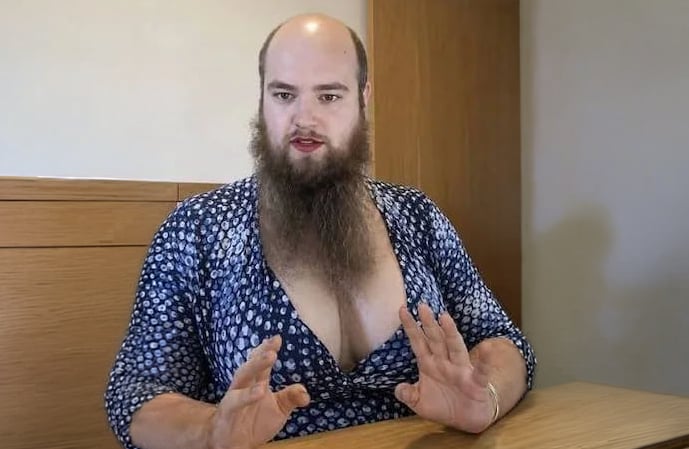
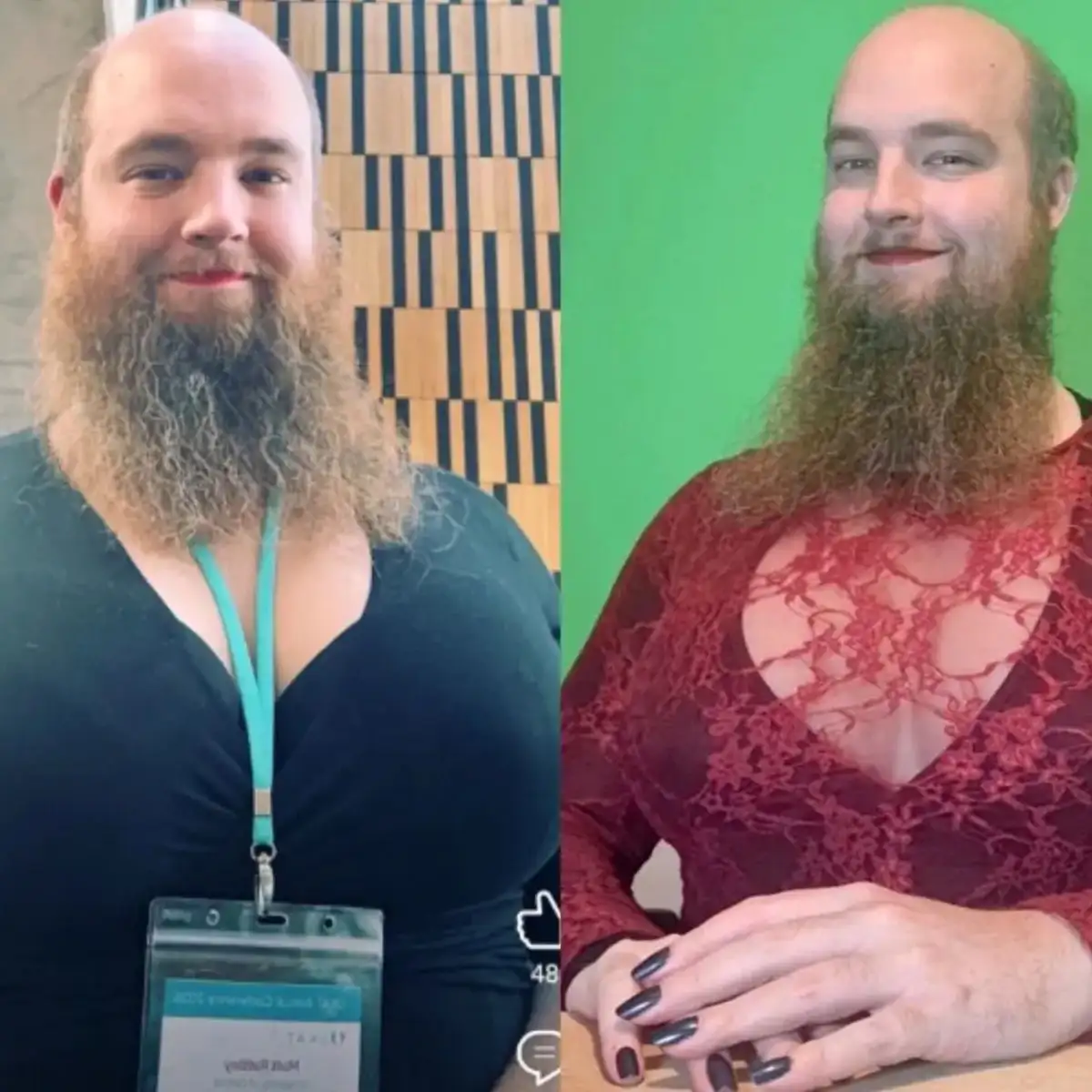
When I first encountered a man wearing enormous prosthetic breasts around the university, I assumed it was something similar – a distasteful joke or fancy-dress costume. I quickly learned that this was his everyday attire.
The man was Matt Rattley, a biochemistry lecturer at St Hilda’s College. His prosthetic boobs were enormous, exaggerated and cartoonish. He wasn’t my lecturer, but I’d see him around the college regularly.
His presentation made me uncomfortable, but I quickly understood that saying so would not be acceptable. Colleagues applauded and celebrated him. You couldn’t simply ask: what on earth is he doing?
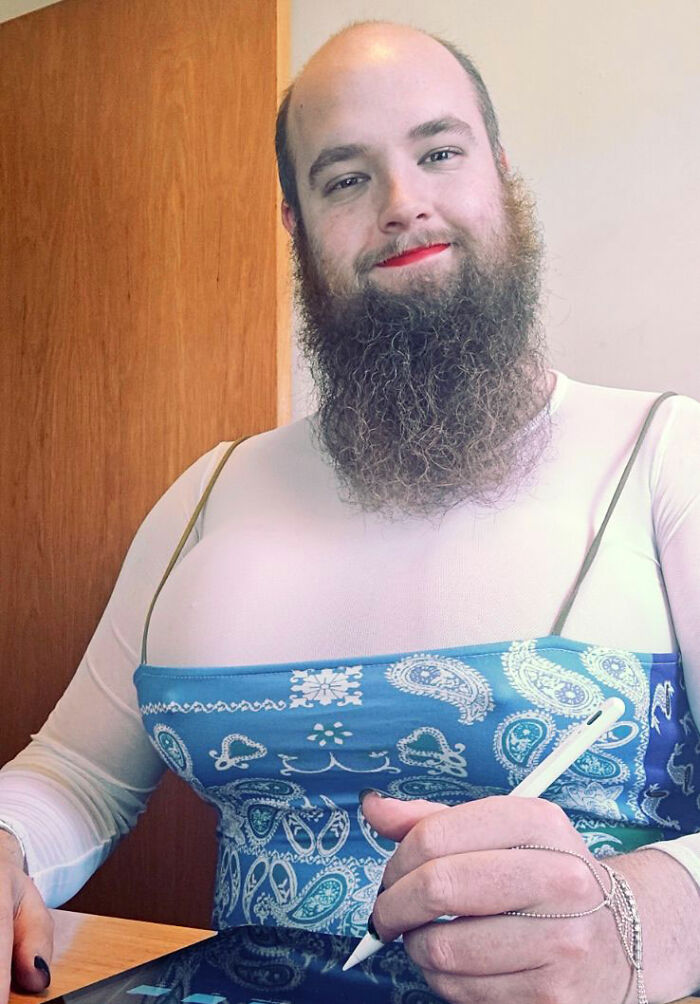
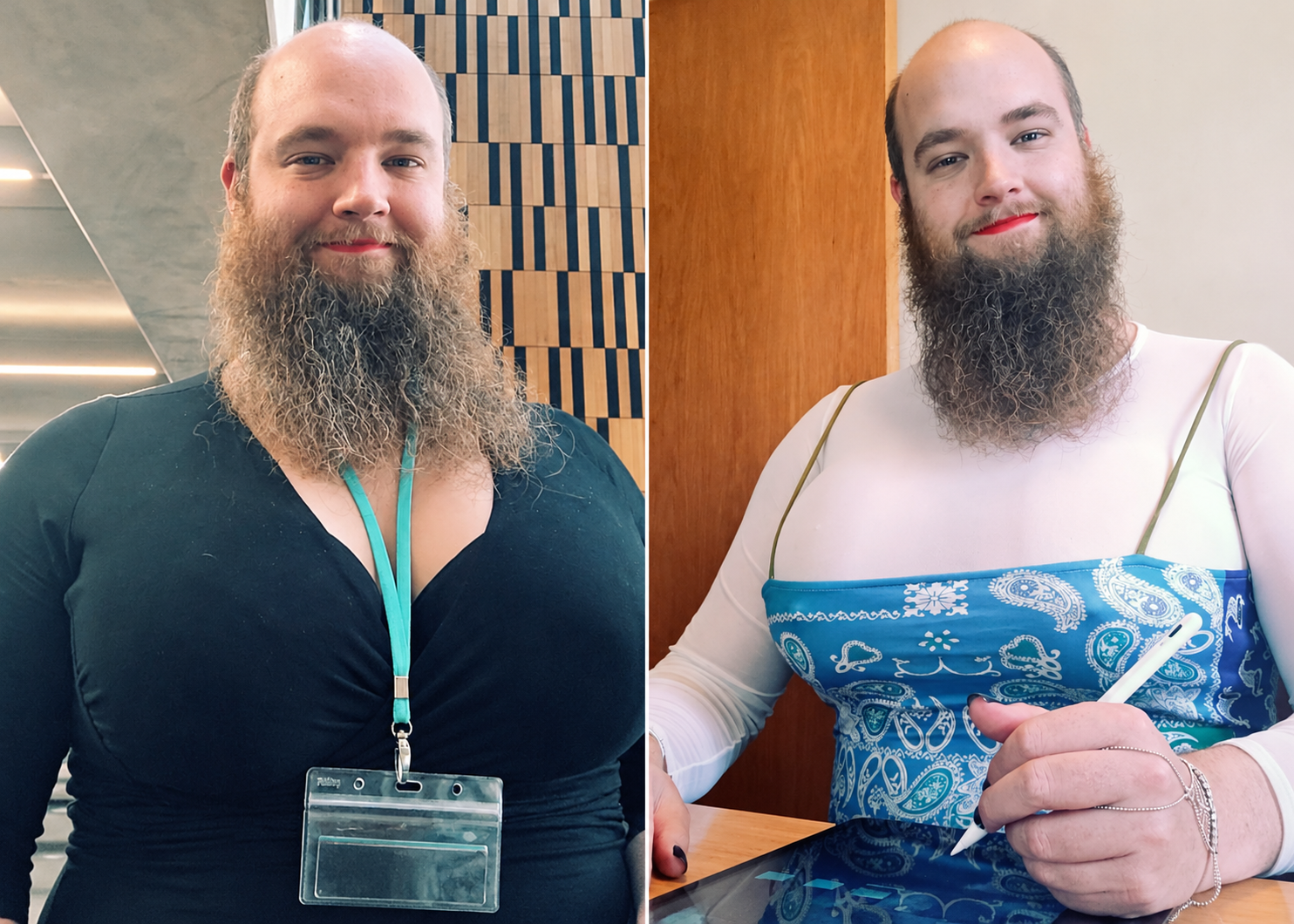
I’d also see his LinkedIn posts, many featuring photographs taken at chest height so that the breasts dominated the image.
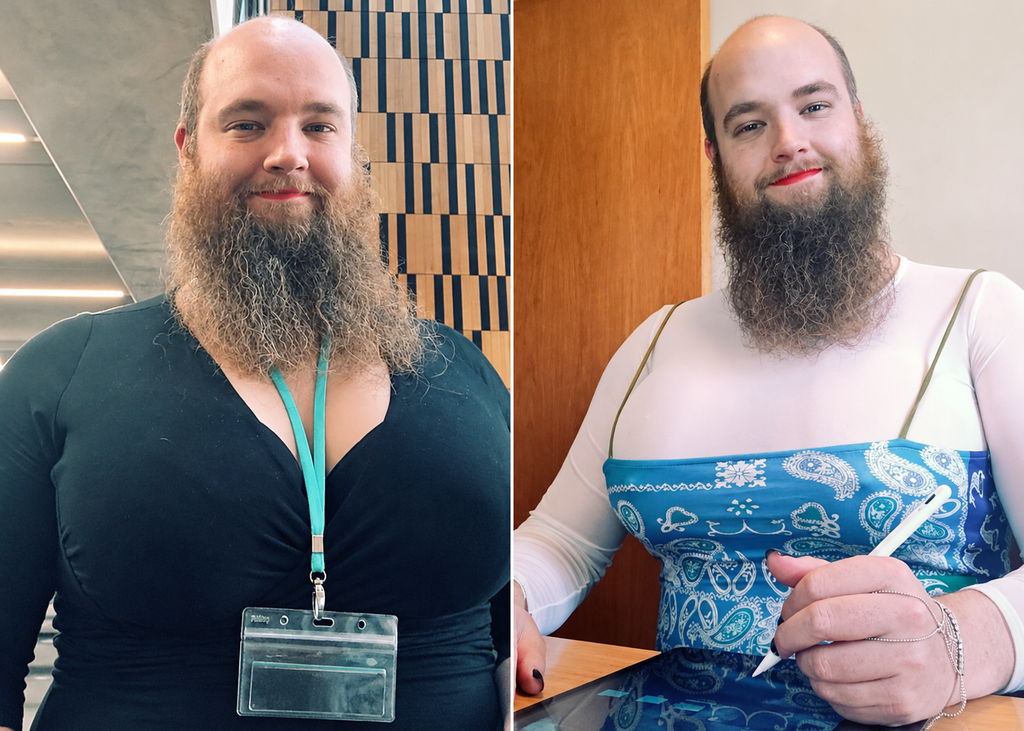
I discussed it with a small number of trusted friends and colleagues. Speaking publicly felt impossible. People I knew professionally, including former supervisors, defended him and condemned those who criticised his presentation. I feared the consequences for my relationships and career.
The Equality Diversity and Inclusion representative I might have approached about feeling uncomfortable openly supported him. I didn’t know who I could speak to without being judged.
As a young woman trying to establish myself as a credible scientist, I find this extraordinary.
Because I cannot imagine presenting myself this way professionally.
I want to be judged on my ideas, research, abilities and determination. I think carefully about how I dress, often choosing high-necked tops and avoiding showing too much skin. I do not feel remotely free to share comparable photographs of myself on a professional networking site.
I wish being seen as an attractive woman wasn’t so often at odds with being taken seriously as a scientist. Despite my academic achievements, I still encounter misogynistic assumptions about my intellect and competence. Becoming a respected female researcher can feel like an accomplishment that is hard won and easily lost.
When I look at those prosthetic breasts, I think about what the same body parts have meant throughout my life: unwanted attention, sexualisation, shame and dehumanisation.
It is depressing to feel that, even in the scientific world I worked so hard to enter, women’s bodies can still be reduced to exaggerated objects for display.
I also think about the students Rattley teaches. He occupies a position of authority over young people, including teenagers just beginning their adult lives.
I remember being a new undergraduate, uncertain about the culture I had entered, which behaviour was acceptable and which boundaries I was entitled to assert.
Had I been in his class, I would have felt deeply uncomfortable, but also guilty for thinking negatively about someone whose internal state I couldn’t know. I certainly wouldn’t have made a formal complaint.
But isn’t it bad enough that female students have to sit with those kinds of uncertainties? That they’re left wondering what his motives are and why the university is allowing it – when so many other things are considered offensive.
When the blow up doll arrived in my department, I tried to imagine a scenario in which a golliwog – a doll caricaturing a black person – might be brought into the workplace and celebrated. I felt sure there would be a swift disciplinary process, perhaps even a national scandal.
Yet no one said a word. In the same way no one has said a word about Rattley wearing prosthetic breasts to work – for years now.
I don’t want to demonise him – but I do want to explain what this feels like from my position as a woman. Part of me wants to give him the benefit of the doubt: perhaps he means no harm and is expressing himself in a way that makes him happy.
Maybe he believes the silence around him means everyone is comfortable.
But silence can mean something very different when people fear the consequences of objecting. Having no complaint to answer is not the same as knowing that nobody is troubled.
What disillusions me is the familiar imbalance: a man’s freedom to express himself is celebrated, while women are left to manage their discomfort quietly. Our acceptance seems to be assumed before anyone has asked how we feel.
I have spent years trying to articulate this, then deciding against sharing it. Even now, I am doing so anonymously. That should tell the university something about how difficult speaking openly feels.
How wonderful it must be to choose to wear the body parts men have spent centuries fetishising, make a spectacle of them, then simply take them off at the end of the day.
To return to your own life, unburdened by the consequences of being a woman.
To be able to play at being us, and then just walk away.
11 Responses
Well done for speaking out. And I’m sorry you had to go through this. It’s obscene and I struggle to understand why the University didn’t have your back. Thank you for sharing. It may well stop other students having to put up with this…
Well done for speaking out. Courage calls to courage. This fetishised performance of femininity is insulting and creepy. Why can’t everyone see this? Perhaps they will soon
What a moving story so well articulated. How the university can put young women through this, I shall never know. Thank you for coming forward and sharing what so many are unable to say.
Brave and bold of you to give us this insight, thank you. This man displaying his fetish, in a place of learning, is entirely unprofessional, and should never have been supported and enabled by his employers.
As a woman who also had to strive to be taken seriously, I absolutely understand your response to Rattley’s ‘boob man’ appearance. Females learn from a young age that we must adapt and change when males present themselves as a fate a compli; adaptation is one of our strengths but often, we adapt at great cost to our own mental wellbeing. What astounds me most here is the gross lack of insight or caring on the part of the university about how insulted the women sharing space with Rattley must feel.
There would of course be flagrant ways of demonstrating the innapororiateness such as all the female students turning up wearing prosthetic penises, but most women are not as confrontational, unkind, or publically ‘needy’ as Rattley seems to be, and due to women’s ability to adapt and live with pain they will probably simply tolerate ‘boob man’ while loathing everything he represents.
This is a powerful testimony of what this really does to young women. I want to say a profound thank you to this young woman. None of this is your fault, this man has a sexual fetish and people that should have protected YOU have completely failed.
Thank you for bravely telling your story. The authorities at St Hilda’s need to step up and stop this – its unbelievable that they haven’t already intervened in this completely unprofessional conduct.
It’s well past time that Oxford – and any other organisation that supports men’s sexual fetishes – was roundly, publicly criticised for this blatant abuse of power and disregard for women. I would say a “class action” is in order by students – walk out until the situation is rectified.
Well done for writing and publishing your perspective of being a bystander for a member of staff performing his fetish in one of the top University colleges.
I find it difficult to comprehend how women can pander to these men, while vilifying the women who say they feel discomfort in his presence, or fail to question his wearing of ‘non-standard’ clothing that is not dissimilar to fetish wear.
Let’s not talk about the college ‘leadership’, where are they in all this? Hiding, afraid in case they upset the EDI brigade?
Thank you for sharing this. It’s utterly disgusting and deplorable that Oxford Uni & St Hilda’s think this is acceptable.
I hope the relevant people at Oxford read this. Including Matt Rattley.