
I have a 32J bust. This means I can’t simply walk into a high street shop and buy a bra that fits. Some days, even wearing a bra is uncomfortable because of the back and rib pain caused by the weight of my breasts, made worse by my scoliosis.
I have spent years trying to conceal them beneath oversized or bulky clothing. Not because I am ashamed of being a woman, but because I have worried that I would not be taken seriously.
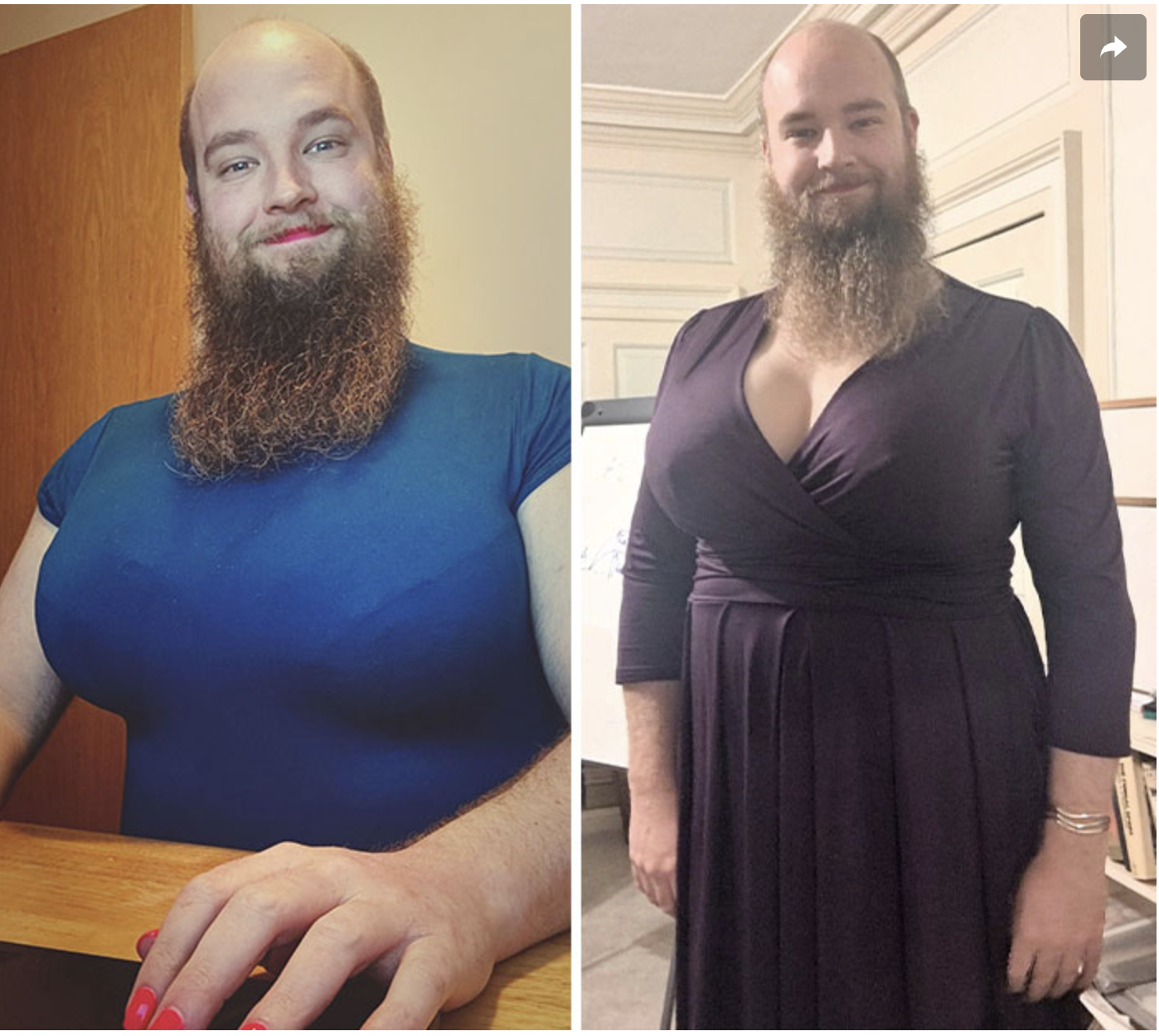
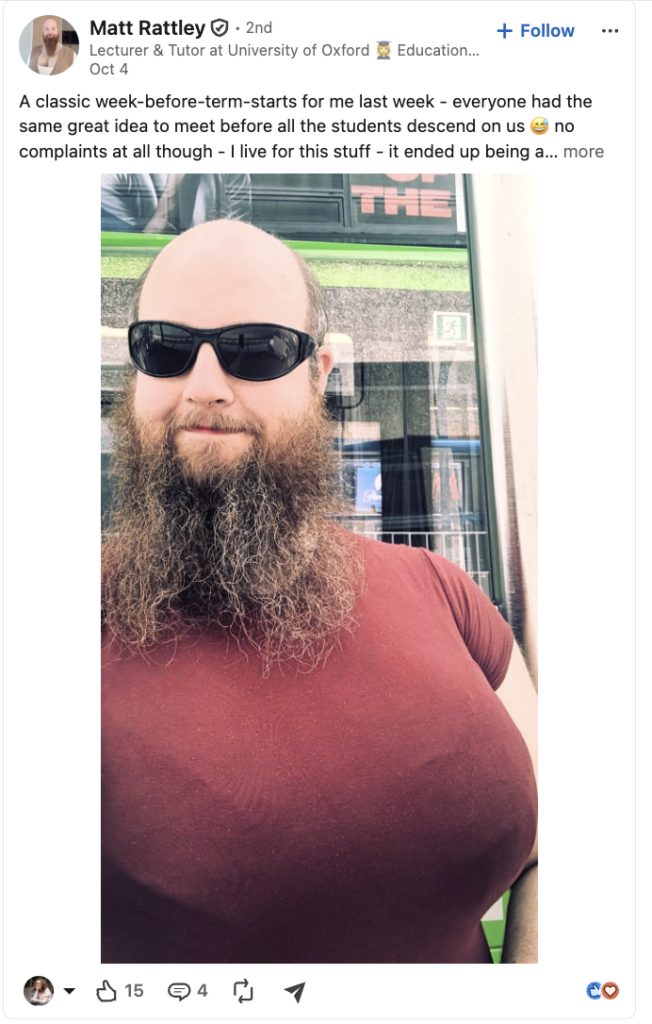
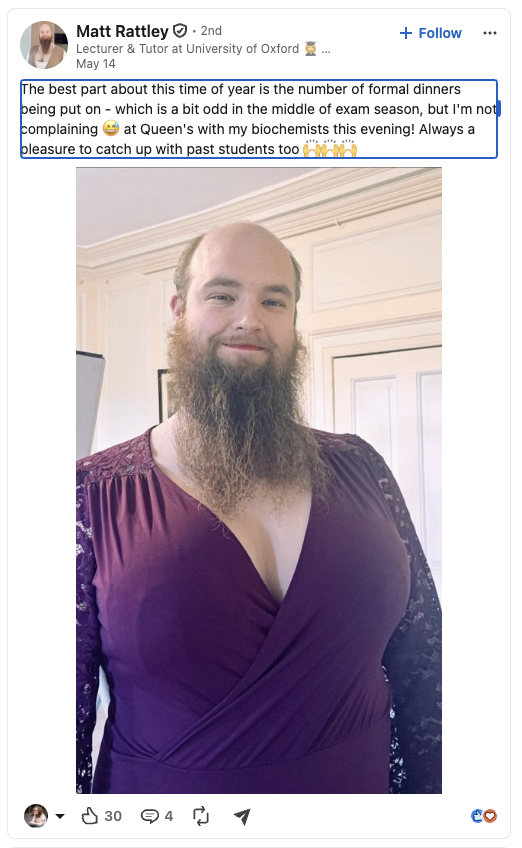
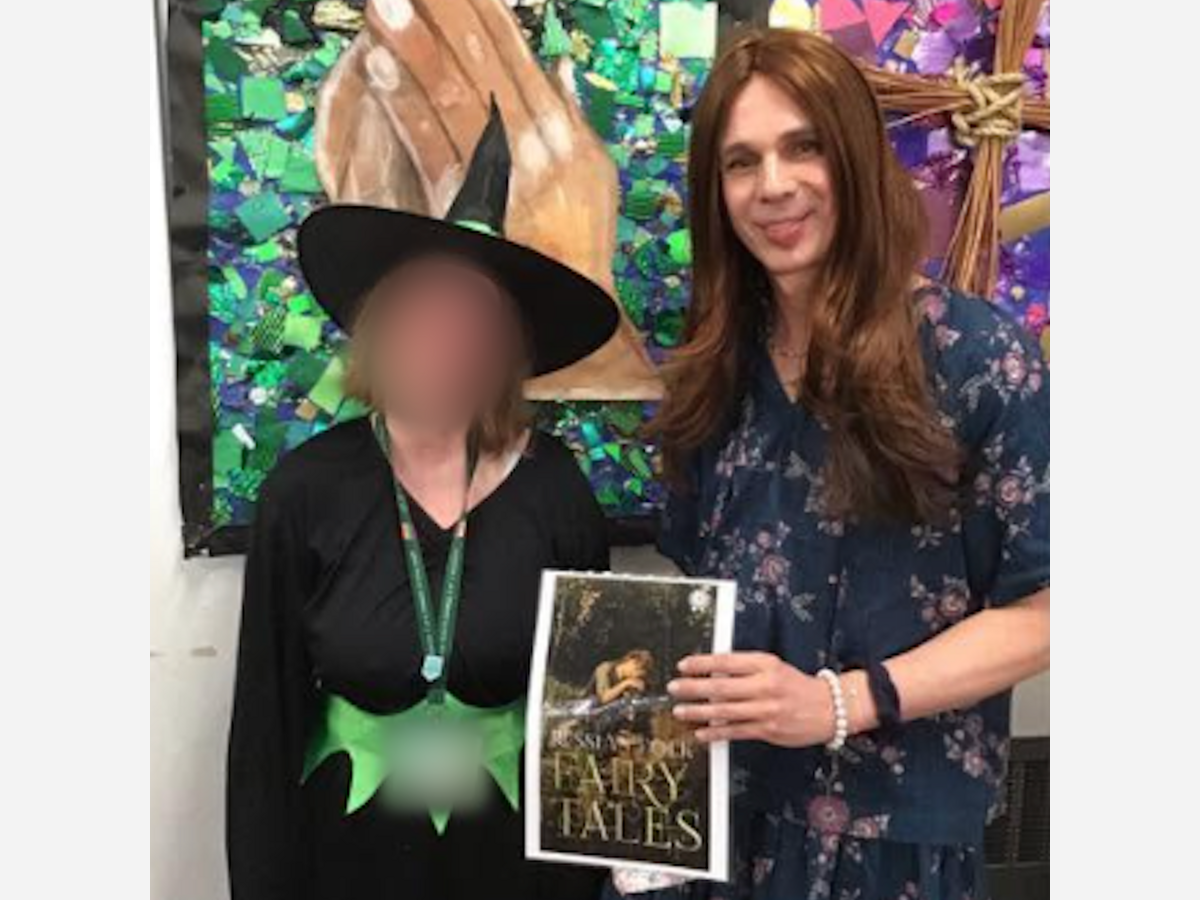
This is why I find the images of Oxford University lecturer Matt Rattley wearing enormous prosthetic breasts at work so deeply troubling. To me, it feels almost like a mockery of women’s bodies and the experiences of those of us who have spent our lives dealing with the physical and emotional consequences of having large breasts.
I remember being deeply embarrassed from the age of eleven, when my breasts began developing considerably earlier than those of many of my peers. Over the years, they continued to grow, as did the attention and scrutiny directed towards them.
I experienced comments from both women and men, being told how lucky I was, receiving unwanted attention from men of all ages, and often feeling that men I dated were primarily interested in my body rather than in me as a person.
These experiences have followed me into adulthood, including professional and academic environments. I have often felt self-conscious and unprofessional simply because of my anatomy.
There is a particular exhaustion in feeling that a part of your body, which you cannot simply remove or put away, might determine how others perceive your intelligence, professionalism or worth.
I understand the desire to reclaim traditionally feminine imagery and I too am proud of being a woman and of my body. However, I find something deeply troubling about treating a part of women’s anatomy as an accessory that can be artificially attached and displayed in a caricatured fashion, particularly when that display is presented as an expression of womanhood.
Breasts are not simply objects or symbols. They are part of our physical bodies and, for many women, are connected to a lifetime of experiences that begin in adolescence. They can bring unwanted sexual attention, embarrassment, social judgement and difficulties with self-image.
Breast reduction is not financially accessible to everyone and many of us simply have to live with the physical consequences of our anatomy.
There is also a reproductive dimension that should not be overlooked. For women who become mothers and choose to breastfeed, breasts can play an important role in feeding their children. They are not detachable symbols of femininity, but living parts of the female body.
I appreciate that people may wish to express their understanding of femininity in different ways and I do not believe that women should have to conform to a particular appearance to be recognised or respected.
But I struggle with the idea that an artificial representation of a female body part, worn as an attachment, can be treated as interchangeable with the lived experience of having that anatomy throughout one’s life.
What I find particularly difficult is the thought of women who have spent years struggling with their breasts, whether through unwanted attention, physical pain, embarrassment or the feeling of being reduced to their bodies, being asked to regard this kind of display as empowering.
For some of us, learning to feel comfortable and proud of our bodies has been a lifelong process.
For much of my life, I have tried to make my breasts less noticeable because I wanted people to see me for who I am, rather than focus on my body.
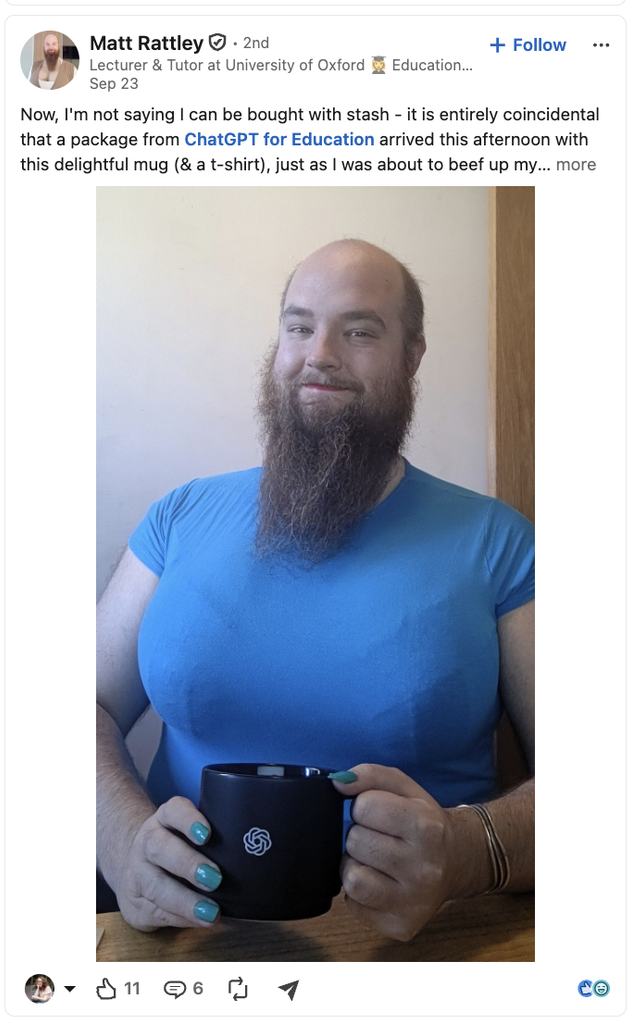
Now I see a male university lecturer drawing attention to himself by wearing an exaggerated representation of the very anatomy I have spent years trying to conceal.
He can take his prosthetic breasts off at the end of the day. I cannot.
And while his choice is discussed and defended as a form of self-expression, I wonder how much thought is being given to the women whose experiences this kind of display may appear to caricature.
Our bodies are not costumes. And our experiences deserve to be taken seriously.
6 Responses
Eloquently spoken, and really says a lot about why this behaviour should not have gone unchecked for all this time.
I have no idea how any woman looking at this man displaying a caricature of women’s anatomy can accept this without recoiling in horror. It’s insulting, dehumanizing and humiliating. In order to feel this is acceptable he must believe that showing a vicious hatred for women and their bodies is now acceptable at Oxford University. Personally I will never accept either the prosthetic breasts or the hormone grown ones as anything but a personal insult to every woman alive and I can’t imagine what is in the heads of the doctors as they hand out cross sex hormones in order for men to laugh at and disrespect every woman they come across. It’s an outrage and an obscenity and should be against the law.
I keep expecting to see this man is involved in some satire/joke (albeit in poor taste), but I know he isn’t and the college is defending this behaviour. Even without the shadow of gender identity ideology years ago, I doubt I would have challenged this appalling misogyny as an 18 year old student.
I could have written this. I’m old now, and in retrospect there is no doubt having naturally large breasts impacts a woman’s entire social and professional life in ways that remain unexamined and only half-acknowledged.
From the start you are under pressure to pretend you love it; to males, it’s like being sexually well-endowed, isn’t it, so who wouldn’t? Of course all the other girls are jealous!
The other girls know it’s not, but they are programmed to hate you anyway, cos, though let’s face it you’re no fashion model, bitch, the boys won’t take their eyes off your cleavage. Even if it’s under wraps.
So everyone hates you, for different reasons.
I’m exaggerating, of course real life is more nuanced – but not always, and not by much.
So yes, what’s happening here is just one more degradation to us, a mockery. Especially in a supposedly respected seat of learning.
This is the gender version of ‘black face’. I find it highly offense. Why is this deemed acceptable?
I can’t imagine how this creep can have any friends amongst his colleagues. If they have any decency, they would surely have to give him an earful and refuse to have anything to go with him.